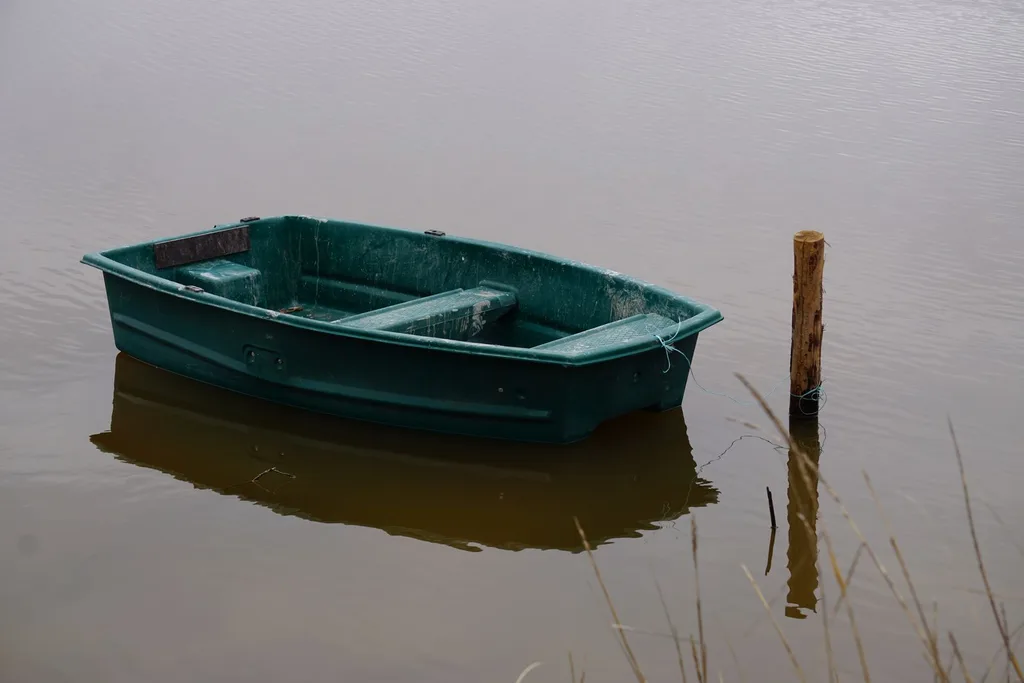
The best small boats for lakes, rivers, and calm water are light, simple, and easy to launch, with a hull that suits sheltered conditions. Small boats are ideal for fishing, exploring quiet waterways, and relaxed days afloat, and they cost less to buy, tow, and maintain than larger boats. The key is to match the boat to the water you will use most, not to the biggest boat you can afford.
Calm water gives you more choice than open sea. A flat-bottomed hull that would pound in a chop rides smoothly on a lake, and a light boat that would feel exposed offshore is perfectly safe on a river. That freedom means you can focus on what matters for your kind of boating: stability, space, ease of handling, and how simple the boat is to launch and store.
What Counts as Calm Water Boating
Calm water means lakes, slow rivers, canals, reservoirs, and sheltered bays where waves stay small and wind has little fetch to build up. These waters are usually close to shore, with easy access to launch ramps and landing places. A boat for this water does not need a deep hull or heavy construction, and it does not need to handle large waves or strong currents.
Before you choose a boat, think about the specific water near you. Is the lake large enough for wind to build a chop? Is the river fast flowing in places, or slow and wide? Are there shallow areas, weed beds, or rocks to avoid? The answers shape the hull, the draft, and the engine you need. A boat that is perfect for a small lake may be too light for a wide river with a strong current, so start with the water, not the catalogue.
Jon Boats and Aluminium Boats
Jon boats are flat-bottomed aluminium boats built for shallow, calm water, and they are one of the most practical small boats you can buy. Their flat hull gives excellent stability at rest, a very shallow draft, and plenty of floor space for fishing gear. They are light to tow, easy to launch from a bank or a small ramp, and simple to maintain. Aluminium does not need the same care as fibreglass, and a jon boat can take bumps against a dock or a riverbank without serious damage.
Aluminium boats in general suit lakes and rivers well. They are durable, easy to repair, and light enough for a small outboard. Look for welded or well-riveted seams, a solid transom, and a floor that feels firm underfoot. A jon boat with a small outboard is a good first boat for fishing and exploring, and our jon boats and aluminium boats guide explains the trade-offs in more detail.
Small Fishing Boats and Bass Boats
Small fishing boats are designed around casting space, rod storage, and stability while you fish. Many have a flat casting deck at the bow, live wells for keeping catch, and storage for tackle boxes. A small bass boat gives you a stable platform and a low profile that is easy to fish from, while a general-purpose fishing boat adds seating and versatility for family trips as well.
For lakes and rivers, a fishing boat in the 14 to 18 foot range is a good starting point. It is large enough to feel stable, small enough to tow easily, and simple enough to launch alone. Check the seating layout, the storage, and whether the boat has a trolling motor mount if you plan to fish slowly along banks and weed edges. Our fishing boats guide covers the features that matter when you choose a boat for angling.
Small Pontoons and Deck Boats
Small pontoons bring comfort to calm water boating. Their wide deck and stable platform suit families, picnics, and swimming, and they are easy to board from a dock. A small pontoon with a modest outboard is quiet, relaxed, and simple to handle, and it gives far more usable space than a traditional hull of the same length. The trade-off is speed and handling in wind, so pontoons suit sheltered water best.
Small deck boats offer a similar amount of space with better handling at speed. Their wide beam gives a roomy cockpit, and they can tow a tube or carry more people than a narrow hull. If you want a boat that does a bit of everything on a lake, a small deck boat is worth a close look. Both types need a trailer and a launch ramp, so check that your local ramp suits the boat you choose.
Inflatables, Dinghies, and Kayaks
For the smallest and simplest option, an inflatable boat or a rigid dinghy can be ideal. Inflatables pack down for storage, launch easily, and are very stable for their size. They suit short trips, fishing close to shore, and use as a tender for a larger boat. A small outboard gives useful speed, while oars are enough for quiet exploring on a calm lake.
Kayaks and canoes are another way to enjoy calm water, and they need no engine at all. They are quiet, cheap to run, and easy to transport on a car roof. They suit solo paddlers and pairs who want exercise and a close view of wildlife. If you want to cover distance or carry a family, a small powered boat is more practical, but for peaceful mornings on a lake, a paddle craft is hard to beat.
How to Choose the Right Small Boat
Start with how you will use the boat most of the time. Fishing needs casting space and stability, family trips need seating and shade, and exploring needs range and a comfortable ride. Then check the practical details: can you tow it with your vehicle, store it at home, and launch it at your local ramp? A boat that is hard to launch will stay on its trailer, however good it looks.
- Match the hull to your water: flat bottoms for shallow lakes, deeper hulls for larger water.
- Check towing weight, trailer condition, and storage space before you buy.
- Choose an engine size that suits the boat and the load, not the largest available.
- Test the boat on the water if you can, and check stability at rest.
Think about the engine as part of the package. A small outboard is light, easy to service, and enough for most lake and river use. Electric trolling motors are quiet and useful for fishing, while a larger outboard gives more speed for watersports. If you are new to engines, our boat engines explained guide will help you understand the options. Whatever you choose, keep the boat simple, keep the gear tidy, and spend your first trips learning the water near you.
Before you buy a small boat, visit your local launch ramp and check that it suits the boat and trailer you have in mind. Some ramps are steep, narrow, or exposed to wind, and a boat that is easy to launch on a calm morning can be hard to recover on a busy afternoon. Practise launching and recovering with a friend until the routine feels smooth, and keep the trailer bearings, lights, and winch in good condition. Store the boat under cover when you can, keep the hull clean, and flush the engine after use in saltwater or silty rivers. Simple care after each trip keeps a small boat reliable, and it means the boat is ready whenever the weather and the water invite you out.
What is the best small boat for a lake?
The best small boat for a lake depends on how you use it. A jon boat or small fishing boat suits anglers, a small pontoon suits families and relaxed cruising, and a deck boat suits a mix of both. For most lake use, a stable boat between 14 and 18 feet with a small outboard is a practical choice.
Are small boats safe on rivers?
Small boats are safe on slow rivers when they are matched to the conditions. Choose a hull with enough freeboard, check the current before you launch, and avoid fast water, weirs, and low bridges. Wear a life jacket, carry a paddle or anchor, and stay close to shore until you know the river well.
How big should a boat for calm water be?
For calm water, a boat between 12 and 18 feet suits most solo and family use. Smaller boats are easier to tow and launch, while larger boats give more space and a more comfortable ride. Choose the smallest boat that fits your usual crew and gear, rather than the largest you can afford.
Do I need a trailer for a small boat?
Most small boats need a trailer unless you keep the boat at a marina or on a mooring. Check that your vehicle can tow the combined weight of boat, engine, and trailer, and that the trailer is in good condition. A well maintained trailer makes launching simple and protects the boat during transport.