
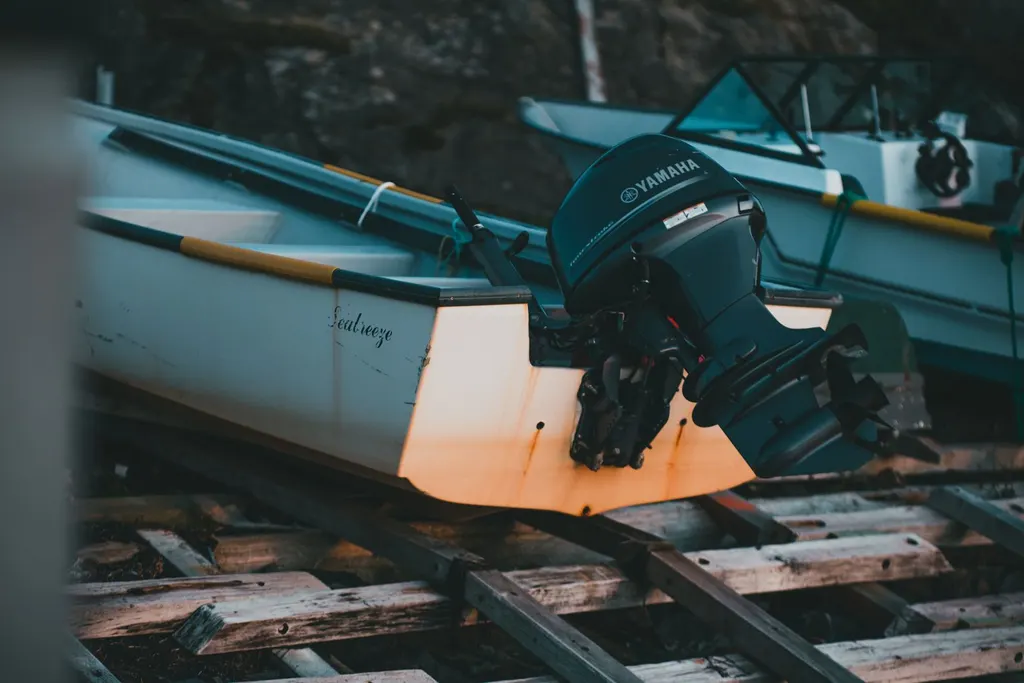
Boat engines come in three main types: outboard, inboard and sterndrive, and each one suits a different kind of boat and boating. An outboard sits on the transom, an inboard sits inside the hull, and a sterndrive pairs an inboard engine with a drive unit outside the hull. The differences affect space, handling, maintenance, noise and cost. Once you understand how each type works, you can choose the engine that fits your boat, your water and how you use it.
Outboard Engines: How They Work
An outboard is a complete engine, gearbox and propeller in one unit, mounted on the transom at the stern. The whole unit tilts up out of the water for shallow water, trailering and maintenance, and it steers by turning the engine itself. Modern four stroke outboards are quiet, fuel efficient and clean, with electronic fuel injection, easy starting and low smoke. They are the most common choice for small and mid sized boats, from fishing boats and pontoons to centre consoles and day cruisers.
Outboards are popular because they are simple to service and replace. A mechanic can remove the whole unit, the boat keeps its full interior space, and the engine is easy to flush, inspect and winterise. The trade off is weight on the transom, exposure to spray and theft risk, and a propeller that sits behind the boat. For more on keeping this type in good order, read our guide to outboard motor maintenance, which covers flushing, servicing and common checks.
Inboard Engines: Power Inside the Hull
An inboard engine sits inside the hull, low and central, and drives a propeller shaft that passes through the bottom of the boat. The propeller sits under the hull, protected from damage and clear of swimmers at the stern, and the engine weight sits low, which helps stability. Inboards are common on larger boats, ski boats, cruisers and displacement hulls, where interior space is less tight and the boat stays in the water for long periods.
Inboards are quiet at the helm, because the engine is enclosed and insulated, and they give a clean transom for swimming, boarding and fishing. They are also harder to service, because access is inside the boat, and they cannot tilt the propeller out of the water. Shallow water needs more care, because the propeller and shaft sit below the hull. Inboard maintenance needs good ventilation, because fuel and exhaust systems sit inside the boat, and any leak must be found and fixed promptly.
Sterndrive Engines: A Mix of Both
A sterndrive, also called an inboard outboard, pairs an inboard engine inside the hull with a drive unit outside the transom that steers and tilts like an outboard. The drive can trim up and down to adjust the running angle, which helps with planing, fuel use and shallow water. Sterndrives are common on bowriders, day cruisers and family boats, where owners want the interior space and quiet of an inboard with the handling and trim control of an outboard.
The compromise brings extra maintenance. The sterndrive unit has bellows, universal joints and a lower unit that need regular inspection, and the bellows in particular must stay sound, because a failed bellow can let water into the boat. Sterndrives are best for boats kept on a trailer or lifted out regularly, where the drive can be inspected and serviced easily. Boats left in the water for long periods need more care with corrosion, growth and the condition of the drive.
Power, Handling and Performance Compared
Power delivery differs between the types. Outboards are light for their power, so they accelerate well and suit planing hulls. Inboards deliver strong, steady torque, which suits heavier displacement hulls and watersports where a smooth pull matters. Sterndrives offer trim control that helps a boat plane cleanly and ride level with different loads. Handling differs too: outboards and sterndrives steer by turning the drive, which gives a tight turning circle, while inboards steer with a rudder, which is less effective at low speed and needs more space to manoeuvre.
Fuel use depends on hull, load, speed and engine condition more than on type alone. A well matched, well serviced engine of any type will be more efficient than a poorly matched one. When you compare boats, look at real world fuel use with a realistic load, not just the brochure figure. A sea trial with your usual crew and gear is the best way to judge acceleration, cruising speed, noise and handling for each engine type.
Maintenance and Servicing by Engine Type
Maintenance needs shape the long term cost of each type. Outboards need regular oil and filter changes, impeller replacement, spark plugs and gear oil, but the work is accessible and the unit can be removed if needed. Inboards need the same engine care, plus shaft, seal and cooling system checks inside the hull, and access can be tight. Sterndrives need all of that, plus bellows, drive oil, universal joints and anode checks on the drive unit.
Electrical systems support every engine type, from starting and charging to fuel pumps and electronics. A weak battery, corroded terminals or a tired alternator can leave any boat stranded, so battery care matters whatever engine you run. Our guide to boat battery care covers charging, storage and testing, and it applies to outboard, inboard and sterndrive boats alike. Keep a service log for your engine, and follow the manual intervals rather than waiting for a fault to appear.
- Outboard: easy access, tilts clear, simple to flush and service.
- Inboard: quiet, low centre of gravity, clean transom, harder access.
- Sterndrive: trim control, inboard space, extra bellows and drive care.
- All types: follow service intervals and keep a full service log.
Cost, Space and Practical Trade Offs
Cost includes purchase, servicing, parts and fuel, and it differs by type. Outboards are often cheaper to buy and service, and a single outboard can be replaced without major hull work. Inboards cost more to install and service, but they can last a long time with proper care. Sterndrives sit in the middle on purchase, but their drive unit adds service items that outboards and inboards do not have. Work out the full cost of ownership, not just the engine, using our guide to the total cost of owning a boat before you commit.
Space is a practical trade off too. An outboard leaves the whole interior free, which suits fishing and family boats where deck space matters. An inboard takes interior space but leaves a clean swim platform and transom. A sterndrive takes some interior space for the engine, but less than a full inboard installation, and it keeps the transom clear for boarding. Think about how you use the stern: for swimming, fishing, boarding or storage, and choose the layout that makes that use easy.
Which Engine Type Fits Your Boating
Choose an outboard if you want simple servicing, easy trailering, shallow water ability and maximum interior space. Choose an inboard if you want a quiet, stable larger boat, a clean transom for swimming, and you keep the boat in the water or in a marina. Choose a sterndrive if you want trim control, a spacious cockpit and a quiet helm on a family cruiser or bowrider, and you are willing to keep up with the extra drive maintenance.
Whatever type you choose, the engine is only as good as its care. Service it on schedule, flush it after salt water, check the cooling, fuel and electrical systems before every trip, and listen for changes in sound, vibration or performance. A well chosen engine, matched to your boat and your water, and looked after with a simple routine, will give you seasons of reliable, enjoyable boating.
Which boat engine type is best for a beginner?
An outboard is usually best for a beginner because it is simple to service, easy to flush and inspect, and it tilts clear of the water for trailering. The boat keeps its full interior space, and a mechanic can remove the unit if needed. Inboards and sterndrives suit larger boats, but they need more access and maintenance knowledge.
Are outboard engines reliable?
Modern four stroke outboards are reliable when serviced on schedule, with regular oil, filters, spark plugs, impellers and gear oil changes. Flush the engine after salt water use, check fuel lines and the cooling telltale before every trip, and fix small faults early. A full service history is a good sign when buying used.
What is the difference between inboard and sterndrive?
An inboard engine sits inside the hull and drives a fixed shaft and propeller under the boat, steered by a rudder. A sterndrive pairs an inboard engine with a drive unit outside the transom that steers and tilts like an outboard. Sterndrives offer trim control, but they need extra care for bellows, joints and the drive unit.
How often should a boat engine be serviced?
Follow the service intervals in your engine manual for oil, filters, spark plugs, impellers and gear oil, and do not stretch them because the engine still sounds fine. Check oil, coolant, fuel lines, belts and the battery before every trip, and book a professional service for the bigger intervals and any fault without a clear cause.