
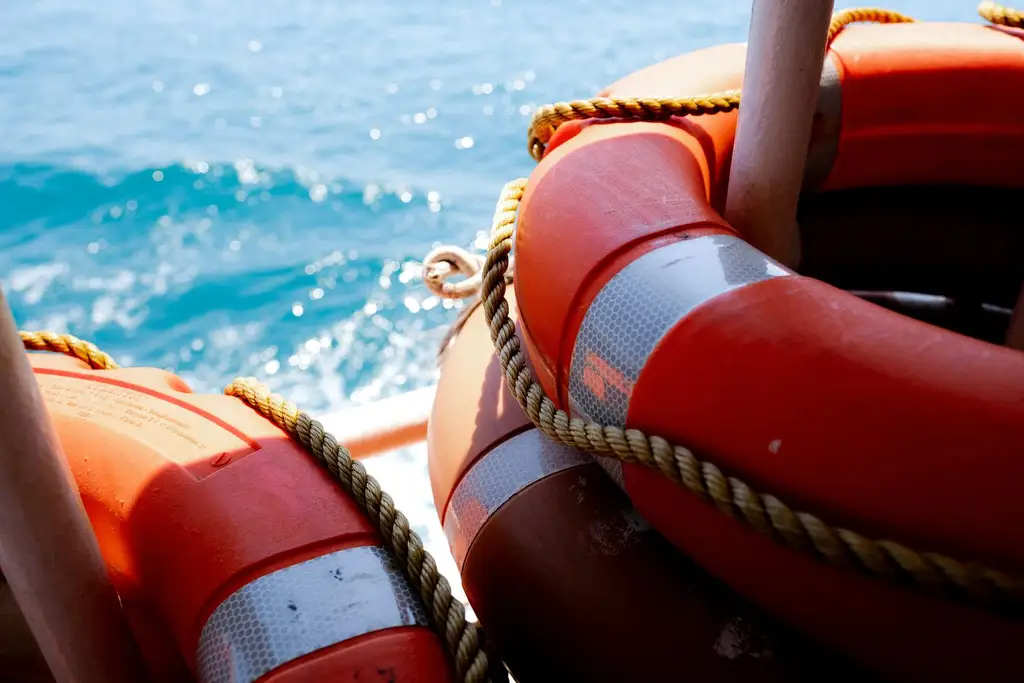
Every boat trip should start with a safety check, not with the engine. The right equipment, checked and within reach, turns a small problem into a minor inconvenience instead of an emergency. This checklist covers the essentials every boat should carry, how to check each item, and how to adjust what you carry for longer trips, night boating or rougher water. Use it before every trip until the checks become habit.
Life Jackets for Every Person on Board
Start with life jackets, because they are the most important item on this list. There should be one correctly sized life jacket for every person on board, including guests and children, and they should be easy to reach, not buried under bags or stored in a locked locker. Check that straps and buckles work, that the fabric is not torn, and that children’s jackets still fit, because children grow quickly and a jacket that fitted last season may be too small now. For inflatable jackets, check that the cylinder is in date and the firing mechanism is armed. Our life jacket buying guide explains how to choose the right size and type for each passenger.
Make sure everyone knows where their life jacket is and how to put it on before you leave the dock. On many boats, the simplest rule is that everyone wears a life jacket whenever the boat is under way, especially children, non swimmers and anyone on deck in rough conditions. A life jacket stored in a locker does not help someone who falls overboard unexpectedly, and in cold or rough water, even a strong swimmer can struggle quickly. Wearing life jackets as a matter of routine removes the decision in the moment when it matters most.
Fire Safety on Board
Fire on a boat is a serious risk because fuel, electrics and cooking equipment are close together in a small space, and help may be far away. Carry at least one marine fire extinguisher suited to fuel and electrical fires, check that it is in date, that the pressure gauge is in the green zone, and that everyone on board knows where it is and how to use it. If you carry a cooker or a heater, check the fuel lines and connections for leaks, and make sure the area around them is clear and ventilated. A small fire blanket is a useful extra for the galley area.
Check your fuel system as part of the same routine. Look for leaks around the tank, hoses and connections, smell for fuel in the bilge, and run the bilge blower before starting an inboard engine. Never refuel with the engine running, and wipe up any spills immediately. A few minutes checking fuel and fire equipment before you leave is a small price for the confidence that a small fault will not become a fire on the water.
Flares, Signals and Sound
If you get into trouble, you need a way to attract attention, and flares and sound signals are the traditional tools for that. Carry flares that are in date and stored dry, and make sure at least one person on board knows how to use them safely. Flares have a limited life, so check the expiry dates at the start of every season and replace them before they expire. A horn or whistle is also essential, for warning other boats and for attracting attention in fog or at night. An orange distress flag, a mirror or a bright torch can help as well, especially in daylight when flares are harder to see.
Modern boats often carry electronic distress aids too, such as a VHF radio with digital selective calling, a personal locator beacon, or an emergency position indicating beacon. These devices can send your position to rescue services, which is invaluable if you are offshore or out of sight of land. Learn how to use them before you need them, keep them charged, and register them correctly so rescue services have your details.
Navigation Lights and Communication
Navigation lights tell other boats where you are, which direction you are moving, and what type of vessel you are, so they must work every time you go out, especially at dusk, at night or in poor visibility. Test the port, starboard, stern and masthead lights before you leave, and carry spare bulbs or a backup torch. Check your compass, charts or chartplotter, and make sure you have a way to navigate if the electronics fail, such as paper charts and a handheld compass. A mobile phone is useful for communication close to shore, but it is not a substitute for a VHF radio, which can reach other boats and rescue services directly.
Before you leave, tell someone ashore where you are going, who is on board, and when you expect to return. This simple step, often called filing a float plan, means someone will raise the alarm if you do not come back on time. Carry a charged VHF radio, know the distress channel and how to make a Mayday call, and keep a mobile phone in a waterproof case as a backup. The boat safety basics guide covers the pre departure briefing and the communication checks that should become routine.
Anchor, Lines and Bilge Equipment
An anchor is not just for stopping for lunch, it is a safety tool that can hold your boat off rocks or a lee shore if the engine fails. Carry an anchor suited to your boat’s size and the seabed where you boat, with enough chain and rope to hold in the depths you will anchor in. Check that the anchor, chain and rope are in good condition, that the bitter end is secured to the boat, and that everyone on board knows how to deploy it quickly.
Look in the bilge before every trip for water, fuel or oil, and check that the pump and float switch operate. A boat that takes on water slowly can be managed with a working pump and a calm response, but a boat with a failed pump and no backup is in trouble quickly. Carry a basic toolkit, spare fuses, a torch, and a first aid kit that is stocked and in date. A first aid kit should cover cuts, burns, seasickness and sunburn, and at least one person on board should know basic first aid. These items take up little space, and they are the ones you will be grateful for when something goes wrong.
Adjusting the Checklist for Longer or Rougher Trips
For longer trips, night boating or rougher water, add to the basics. Carry extra fuel, water and food, spare clothing and a means of keeping warm, and check the weather forecast and tide times before you leave. For night trips, test every light, carry spare torches and batteries, and make sure reflective tape and radar reflectors are in place. Our guide to night boating safety tips covers the extra checks for boating after dark. For offshore trips, consider an emergency beacon, a life raft, and a more complete medical kit, and make sure your crew knows the plan if someone falls overboard.
Whatever the trip, do the checks in the same order every time so nothing is missed. A short, consistent routine is more reliable than a long list you only use occasionally, and it sets a good example for your crew and passengers. Safety equipment is not clutter, it is the reason a bad day on the water ends with a story instead of a rescue.
- Life jackets for every person, sized correctly and easy to reach.
- Fire extinguisher in date, flares in date, horn and torch.
- Navigation lights working, VHF radio charged, float plan filed.
- Anchor, bilge pump, first aid kit and basic toolkit on board.
What safety equipment must a boat carry?
Every boat should carry a correctly sized life jacket for each person, a fire extinguisher, flares, a horn or whistle, navigation lights, an anchor, a bilge pump and a first aid kit. Requirements vary by location and boat size, so check the rules that apply where you boat and add extra gear for longer or offshore trips.
How often should I check my boat safety equipment?
Check safety equipment before every trip, and do a full review at the start of every season. Look for expiry dates on flares and fire extinguishers, test lights, pumps and radios, and replace anything damaged, worn or out of date before you leave the dock.
Do I need flares on a small boat?
Flares are recommended on most boats, because they are a reliable way to attract attention in an emergency, especially offshore or at night. Check the rules where you boat, keep flares dry and in date, and make sure someone on board knows how to use them safely.
What should be in a boat first aid kit?
A boat first aid kit should cover cuts, burns, seasickness, sunburn and minor injuries, with bandages, antiseptic, plasters, gloves and any personal medication your crew needs. Keep it stocked, in date and easy to reach, and make sure someone on board knows basic first aid.
One thought on “Boat Safety Equipment Checklist for Every Trip”