
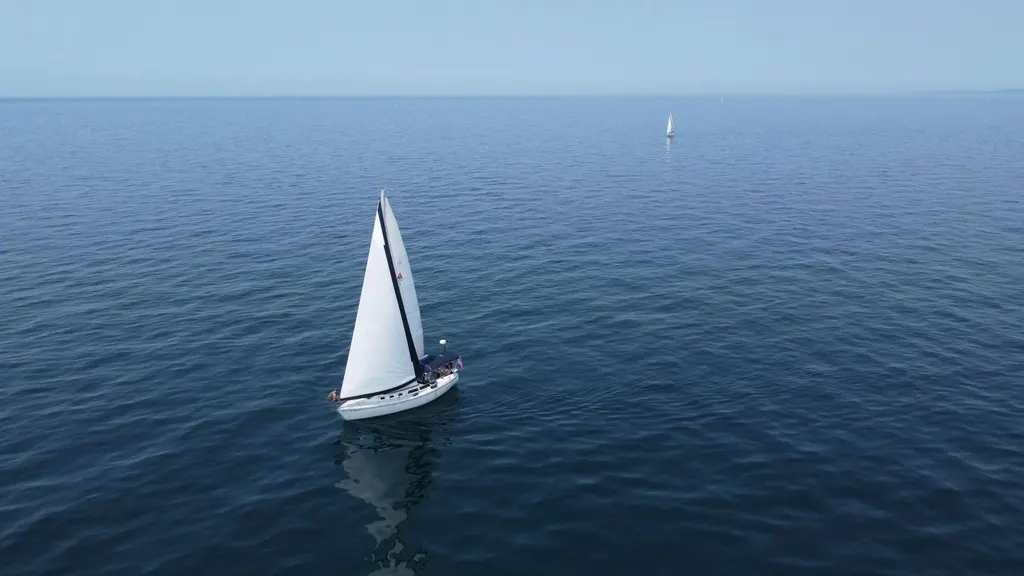
Sailing basics start with one simple idea: the wind pushes the sails, the sails pull the boat, and the rudder and keel turn that push into forward motion. You do not need to master every term before your first trip. Learn how the wind works, how to set the sails, how to steer and how to stay safe, and the rest follows with practice. With a small, forgiving boat, calm water and a patient approach, most beginners feel confident after only a few outings.
How a Sailboat Moves
A sail works like a wing. When wind flows across the sail, it creates lift that pulls the boat forward, while the keel or centreboard below the water stops the boat from sliding sideways. The mainsail is the large sail behind the mast, and the jib or headsail is the smaller sail in front. Together they balance the boat and give you control. When the sails are trimmed correctly, the boat moves smoothly and the helm feels light. When they are too loose or too tight, the boat slows, heels over or becomes hard to steer.
Wind direction decides your course. You cannot sail directly into the wind, so you sail at an angle to it, tacking from side to side to make progress upwind. Sailing across the wind is called a reach, and it is often the fastest and most comfortable point of sail. Sailing with the wind behind you is a run, which feels gentle but needs care when you change direction. Learning to feel where the wind comes from, by watching flags, ripples and telltales on the sails, is the core skill of sailing.
The Parts of a Sailboat You Need to Know
Start with the main parts. The hull is the body of the boat, the mast holds the sails up, the boom extends back from the mast and carries the foot of the mainsail, and the rudder steers the boat. The tiller or wheel connects to the rudder, the keel or centreboard keeps the boat upright and on course, and the sheets are the ropes that control the sails. The halyards raise the sails, and the cleats hold ropes in place. You do not need to memorise every line at once, but knowing these few parts makes every lesson easier to follow.
On a small dinghy, everything is close at hand and you learn fast, because you feel every gust and every shift in balance. On a larger keelboat, the boat is more stable and forgiving, and there is room for an instructor and crew. Both are good ways to start, and many beginners learn on a dinghy first, then move to a keelboat for longer trips. If you are new to boating altogether, our boating basics for new boaters guide covers the general safety and handling knowledge that supports your sailing lessons.
Steering, Tacking and Gybing
Steering a sailboat is simple once you learn that the tiller works in the opposite direction to the way you want to turn. Push the tiller to the left and the boat turns right, push it to the right and the boat turns left. A wheel steers like a car, which some beginners find easier. Keep your movements smooth and small, look where you want to go, and let the boat respond before you correct again. Oversteering is the most common beginner fault, and it slows the boat and confuses the crew.
Tacking is turning the bow through the wind to change direction upwind. Call out that you are ready, turn the helm smoothly, release the old jib sheet and pull in the new one as the sail crosses. Gybing is turning the stern through the wind when sailing downwind, and it needs more care because the boom swings across the boat with force. Always warn the crew, keep heads down and control the mainsheet so the boom does not slam across. Practise both moves in light wind first, with plenty of space around you.
Setting and Trimming the Sails
Setting the sails means raising them, checking they are free of twists and adjusting the sheets until they fill with wind. The mainsail should have a smooth curve with no deep wrinkles, and the telltales on the sail should stream backwards on both sides when the trim is right. If the sail flutters at the front edge, pull the sheet in a little. If the sail looks too full or the boat heels hard, let the sheet out a little or reduce sail. Small, frequent adjustments work better than large, sudden ones.
Reefing means reducing sail area in stronger wind, and it is a skill every beginner should learn early. A reefed sail keeps the boat upright, easier to steer and more comfortable, while a full sail in strong wind makes the boat heel, weather helm grow and control harder. Do not wait until the boat feels overpowered. Reef early, sail flat and enjoy the trip. A well reefed boat is often faster than an overpowered one, because it stays on course and wastes less energy fighting heel.
Safety First on Every Sail
Safety on a sailboat starts before you leave the dock. Check the weather forecast, the wind strength and the tide, and choose a day with light, steady wind for your first trips. Wear a life jacket that fits, tell someone ashore where you are going and when you expect to return, and carry a way to call for help. Check the boat for working bilge, sound rigging, secure fittings and a clear deck. Our boat safety basics guide gives the full checklist, and it applies to sailing just as much as to powerboating.
- Check the forecast and wind, and sail in light, steady conditions at first.
- Wear a life jacket, keep the deck clear and warn the crew before every tack or gybe.
- Know how to stop the boat, drop the sails and start the engine if fitted.
- Stay within sheltered water until your handling and weather reading improve.
Your First Sailing Trips: A Simple Plan
Your first trips should be short, simple and close to home. Pick a calm day, a sheltered bay or lake, and a boat you can handle with ease. Start with a short sail out and back, practise tacking in open water, and come in while you still feel fresh. Take an experienced sailor or instructor with you for the first few outings, and ask questions as you go. Learning with a patient crew is faster and more enjoyable than learning alone, and it builds good habits from the start.
After each trip, think about what went well and what felt hard. Was the sail trim right, did the tacks feel smooth, did you read the wind well? A short note after each sail helps you track progress and spot patterns. Size also matters for comfort and learning, so if you are choosing your own boat, read our guide on how to choose the right boat size and pick a boat that fits your crew, your water and your experience, not the largest one you can afford.
Learning, Practice and Next Steps
A structured course is the fastest way to build confidence. A beginner course covers rigging, launching, steering, sail trim, safety and basic rules of the water, and it gives you supervised time on the water with feedback. After the course, practise regularly on the same boat if you can, because familiarity builds feel. Sail with different crews, try different wind strengths gradually, and take a further course when you want to sail further, at night or in stronger conditions.
Sailing rewards patience and curiosity. The wind changes, the water changes and every trip teaches something new. Keep your first season simple, sail often, ask for help when you need it and enjoy the quiet, steady feeling of moving by wind alone. With sound basics, good safety habits and regular practice, you will soon sail with the calm confidence that makes the sport so rewarding.
Is sailing hard to learn for a beginner?
Sailing is not hard to learn at a basic level, especially on a small boat in light wind with an instructor. Most beginners learn to steer, tack and trim sails in a few outings. The skill grows with practice, and a structured course helps you learn safely. Start on sheltered water, keep trips short and build up gradually.
What wind strength is best for learning to sail?
Light to moderate wind is best for learning, because the boat stays upright, the sails are easy to handle and mistakes are gentle. Strong wind makes the boat heel hard and the boom swing with force, which is stressful for a beginner. Check the forecast, choose a calm day and reef early if the wind builds while you are out.
Should I learn on a dinghy or a keelboat?
A dinghy teaches feel quickly because you sense every gust and shift in balance, and it is easy to recover after a capsize. A keelboat is more stable and forgiving, with room for an instructor and crew. Both work well, and many sailors start on a dinghy, then move to a keelboat for longer trips and cruising.
What safety gear do I need for sailing?
Wear a well fitting life jacket, carry a way to call for help, and keep a throw line, first aid kit and sound signalling device on board. Check the weather, tell someone ashore your plan, and inspect the rigging, bilge and fittings before you leave. Practise capsize and man overboard recovery in a safe, supervised setting.