Pontoon boats suit people who want space, comfort and relaxed time on the water more than speed or rough water performance. They float on two or three aluminium tubes, which gives them a wide, flat deck, stable handling at low speed and room for seats, tables and gear. If your ideal day is a slow cruise, a swim stop or a picnic with family and friends, a pontoon is hard to beat. If you want to cross open water in a chop, tow at high speed or fish in tight, shallow creeks, other hull types may fit better.
What Makes a Pontoon Different
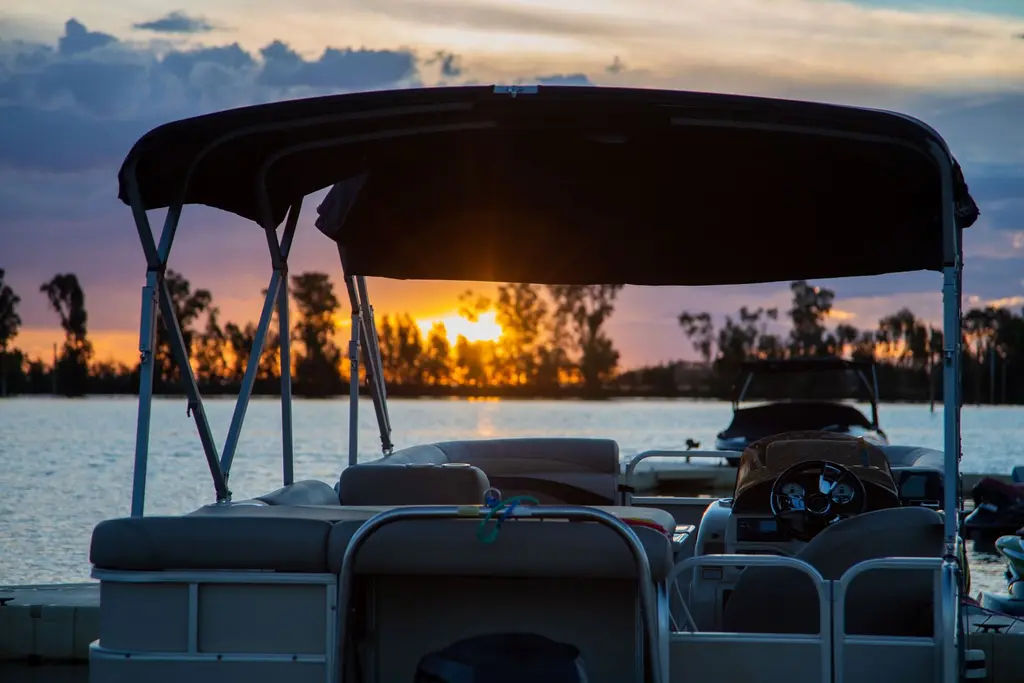
A pontoon has no deep V hull cutting through waves. Instead, its tubes sit on the water and support a flat deck, so the boat feels steady when people move around, board from a dock or step on and off at a beach. That stability is the main reason families and new boaters like them. The deck layout is open and flexible, with lounge seats, a helm, storage under the seats and space for a cooler, fishing rods or a small table. Many pontoons also have a canopy or bimini top for shade, which makes long, sunny days far more comfortable.
Power usually comes from an outboard engine on the stern, and the size of that engine shapes what the boat can do. A modest engine is enough for gentle cruising on a lake or river, while a larger engine opens up watersports and faster travel. A third centre tube, often called a tritoon, adds buoyancy, improves handling and supports more power. Before choosing, think about the water you will use most. Calm lakes, slow rivers and sheltered bays are ideal pontoon water, while exposed coastal water with regular swell is not.
The Main Advantages of a Pontoon Boat
Space is the clearest advantage. A pontoon of modest length can carry more people in comfort than a similar length monohull, because the deck is wide and the seating wraps around the edges. Boarding is easy too, with a low step from the dock and often a gate at the front or side. For older passengers, young children and anyone with limited mobility, that easy access matters on every trip. The flat deck also makes it simple to load coolers, chairs, fishing gear and swim equipment without climbing over seats or squeezing through narrow walkways.
Comfort and versatility come next. You can cruise, fish, swim, picnic and watch wildlife from the same boat, and you can change the layout by moving portable seats or adding accessories. Maintenance is relatively straightforward, because the aluminium tubes, deck and outboard are accessible and easy to wash. Fuel use at cruising speed is modest for the space on offer, and the boat is forgiving to handle at the dock, which helps new owners build confidence. For a closer look at how size shapes comfort and handling, read our guide on how to choose the right boat size before you shortlist a length.
The Downsides to Weigh Honestly
The same flat, wide design that gives a pontoon its stability also limits its performance in rough water. Waves can slap under the deck, spray can reach passengers, and the boat can feel less secure in a steep chop than a deep V hull. Wind catches the tall sides and canopy, so docking in a crosswind needs care and practice. Speed is also limited unless the boat has a third tube and a larger engine, and even then it will not handle like a sports boat. Towing a wakeboarder or skier is possible on some models, but it is not the pontoon’s strongest use.
Who a Pontoon Suits Best
Pontoons suit families best of all, because the space, stability and easy boarding make group days simple and safe. They also suit anglers who fish calm lakes and rivers, swimmers who want a platform to jump from and climb back onto, and new boaters who want forgiving handling while they learn. If you boat mainly on inland water, carry a group often and value comfort over speed, a pontoon is a strong match. Our guide to the best boats for families compares pontoons with other family friendly types, so you can see where each one wins.
A pontoon suits you less well if you regularly face open water, strong tides or rough conditions, or if you want a boat for serious offshore fishing, high speed watersports or long distance cruising. In those cases, a deep V hull, a centre console or a cabin boat will handle the water better and keep passengers drier. Be honest about your real use, not the occasional dream trip. The boat that fits ninety percent of your days is the right boat, even if it is not the one that fits the rare exception.
Choosing the Right Pontoon Layout and Power
Layout choices shape how the boat feels day to day. Fishing layouts add rod holders, livewells and open deck space at the stern. Cruise layouts add lounge seats, a table and a changing area. A rear lounge, a front gate and a wide boarding door all make life easier. Check the weight capacity and the seating capacity, and make sure they match your usual group plus gear, coolers and fuel. A boat that is crowded at full capacity is less enjoyable than one with room to spare.
Power should match the water and the load. A small engine is fine for a quiet lake, but a boat that often carries a full group, tows inflatables or fights a river current needs more power in reserve. Ask for a test run with a realistic load on board, and watch how the boat accelerates, turns and handles at cruising speed. A deck boat offers a useful comparison point, because it shares some of the open deck idea with a different hull shape, so read our deck boats beginner guide if you are torn between the two.
- Check the tubes for dents, leaks, corrosion and damaged welds before you buy.
- Test the gates, rails, seats and canopy for smooth, secure operation.
- Confirm the engine service history and the condition of the trailer and tyres.
- Take a test run with a realistic passenger load on your usual type of water.
Running Costs and Care Through the Season
Running a pontoon is generally straightforward, but the costs still add up. Fuel, servicing, insurance, storage, cleaning and occasional parts all need a place in your budget. Wash the tubes and deck after use, flush the engine after salt water, and keep the interior dry and ventilated between trips. Check the battery, the bilge pump, the lights and the steering before each outing, just as you would on any boat. A cover protects the seats and deck from sun and rain, and it keeps the boat ready for the next trip.
At the end of the season, clean the boat thoroughly, service the engine, drain water from systems that can freeze, and store the boat covered and supported. A little care in storage prevents mould, corrosion and flat batteries, and it makes the first trip of the next season a pleasure rather than a repair job. A pontoon rewards simple, regular care, and in return it gives you seasons of relaxed, social boating on the water you love most.
So, Is a Pontoon Right for You
A pontoon is right for you if calm water, comfort and company are your priorities, and if you want a boat that is easy to board, easy to handle and easy to enjoy with a group. It is less right if you need rough water ability, high speed or offshore range. Visit a dealer or a boat show, step aboard several layouts, sit in the helm seat and imagine your usual day on the water. The right pontoon should feel spacious, stable and welcoming from the first step on board, and that feeling is the best guide to your decision.
Are pontoon boats good for beginners?
Yes, pontoons are good for beginners because they are stable, forgiving to handle at low speed and easy to board from a dock. The wide flat deck gives passengers room to move safely, and the layout is simple to learn. New owners should still practise docking in wind, learn the local rules and build experience on calm water first.
Can pontoon boats handle rough water?
Pontoons handle calm lakes, slow rivers and sheltered bays well, but they are not ideal for rough open water. Waves can slap under the flat deck and spray passengers, and wind can push the tall sides during docking. A third centre tube improves handling, but a deep V hull remains the better choice for regular rough water use.
How many people can a pontoon boat carry?
Capacity depends on length, tube size and layout, so always check the capacity plate for the maximum number of people and total weight. A pontoon of modest length often carries more people in comfort than a similar monohull, but the limit includes gear, coolers and fuel. Never exceed the stated capacity, even for a short trip.
What should I check before buying a used pontoon?
Check the tubes for dents, leaks, corrosion and damaged welds, and test the deck for soft spots. Inspect the engine service history, the steering, the electrical system and the trailer. Take a test run with a realistic load, and look at the seats, canopy and rails for wear. A professional inspection is wise before you commit.