
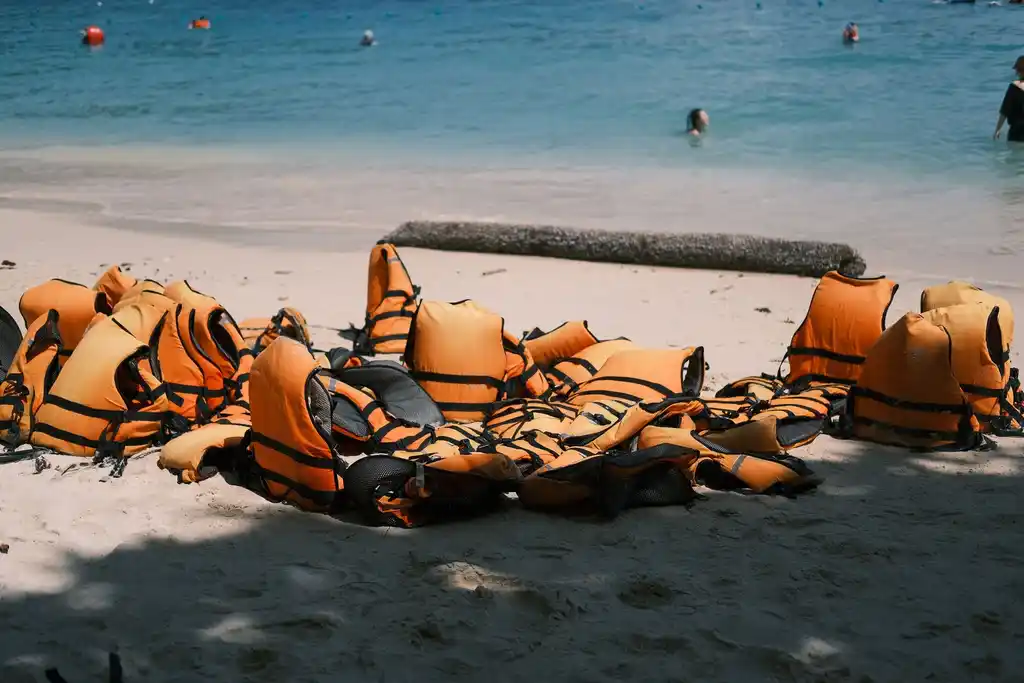
A life jacket is the single most important piece of safety equipment on any boat, and it only works if it fits properly and is actually worn. This guide explains the types, the fit, and the features to look for, so you can choose a life jacket every passenger will wear without complaint.
Why Fit Matters More Than Brand
Life jackets are sized by weight and chest size, not by age alone, and the right fit is the difference between a jacket that saves you and one that slips off. A good fit is snug but comfortable, with all straps fastened and adjusted so the jacket does not ride up when you lift your arms or when someone pulls up on the shoulders. For children, weight is the key measurement, and a jacket that is too big is dangerous because a small child can slip out of it in the water. Always try a life jacket on before you buy it, and try it on over the clothing you will normally wear on the boat. A jacket that fits over a T shirt in a shop may feel very different over a waterproof jacket on a cold morning.
Comfort is not a luxury, it is a safety feature. A life jacket that chafes, restricts movement or makes it hard to sit, fish, sail or handle ropes will be taken off, and a life jacket in a locker helps no one. Look for soft, flexible foam, smooth edges, and straps that adjust easily and stay in place. Sit down, raise your arms, bend forward, and check that nothing digs in or rides up. The best life jacket is the one you forget you are wearing.
Understanding Life Jacket Types
Life jackets come in several types, and the right choice depends on where and how you boat. Inherently buoyant jackets use foam to provide flotation all the time, with no action needed from the wearer. They are simple, reliable and a good choice for beginners, children, non swimmers and anyone who wants a jacket that works the moment they enter the water. Inflatable life jackets use a gas cylinder to inflate on immersion or when the wearer pulls a cord. They are lighter and less bulky, which makes them comfortable for long days on the water, but they need regular checks, the cylinder and firing mechanism must be in date, and they are not the best choice for children or for activities where you may be in the water often.
Some jackets are designed for specific activities, such as fishing, sailing, kayaking or watersports, with features like pockets, harness attachment points or extra freedom of movement. Check the buoyancy rating and the intended use on the label, and make sure the jacket is approved to the standard that applies where you boat. If you are unsure which type suits your boating, our boat safety equipment checklist explains what to carry for different trips.
How to Check the Fit Step by Step
Start by checking the label for the weight range and chest size, and choose the size that matches the wearer. Put the jacket on, fasten all buckles, zips and straps, and tighten them so the jacket feels snug around the body. Then do the lift test. Ask someone to pull up firmly on the shoulder straps, or lift the jacket yourself from the shoulders. If the jacket rides up past your chin or over your ears, it is too loose or too big, so tighten the straps further or try a smaller size. A jacket that stays in place during the lift test is far more likely to stay in place in the water.
Next, check movement and comfort. Sit down as you would on the boat, reach forward, and turn your head from side to side. The jacket should not press on your neck, restrict your breathing, or make it hard to move your arms. For children, also check the crotch strap if fitted, which stops the jacket riding up, and make sure the head support, if present, keeps the child’s head in a safe position. If the jacket feels wrong in the water, it is the wrong jacket.
Choosing Life Jackets for Children
Children need life jackets designed for their size and weight, not adult jackets that are too big. A child’s jacket should have a snug fit, a crotch strap, a head support or collar that helps keep the face out of the water, and a grab handle that lets an adult lift the child from the water. Bright colours make a child easier to spot, and a whistle attached to the jacket is a useful extra. Check the weight range on the label carefully, because children grow quickly and a jacket that fitted last season may be too small this year. Try it on at the start of every season, and replace it when the child outgrows the weight range, even if the jacket still looks new.
Make wearing a life jacket a normal, non negotiable part of boating for children, and set the example by wearing yours too. Children copy what adults do, so a skipper who wears a life jacket sends a far stronger message than any rule. Keep children’s jackets accessible, not buried under other gear, so they can be put on before the boat leaves the dock. For more on keeping children safe on board, see our guide to best boats for families.
Features Worth Paying For
Beyond fit and type, a few features make a real difference. Reflective tape helps you be seen at night or in poor visibility, and a whistle is a simple, reliable way to attract attention. Pockets are useful for a phone, a knife or a small torch, and a spray hood can help keep water from your face in rough conditions. For inflatable jackets, look for a clear status indicator that shows the cylinder is armed, and a manual inflation cord as a backup.
Bright colours, especially orange, yellow or red, make you much easier to spot in the water than dark colours, so choose visibility over style. Avoid jackets with heavy, stiff foam that restricts movement, and avoid second hand jackets with unknown history, because foam can degrade, straps can weaken, and an inflatable jacket may have a spent or out of date cylinder. A life jacket is not the place to save money. Buy new, buy the right size, and buy a model you will actually wear.
Caring for Your Life Jacket
A life jacket needs regular care to stay reliable. After each trip, rinse it with fresh water, especially after use in salt water, and let it dry fully before storing it in a cool, dry place out of direct sunlight. Check the fabric for tears, the straps and buckles for wear, and the stitching for any signs of coming apart. For inflatable jackets, check the cylinder, the firing mechanism and the expiry date, and service the jacket according to the maker’s instructions. Replace any jacket that is damaged, has lost buoyancy, or has an out of date inflation system.
Make a habit of checking life jackets at the start of every season and before any longer trip. Count them, check the sizes against your regular passengers, and make sure there is one for every person on board, including guests and children. The boat safety basics guide covers this briefing and the other checks that should become routine before every trip.
- Choose by weight and chest size, not by age alone.
- Do the lift test: the jacket must not ride up past your chin.
- Pick bright colours, reflective tape and a whistle.
- Rinse, dry and check your jackets every season.
How should a life jacket fit?
A life jacket should feel snug with all straps fastened, and it should not ride up past your chin when someone pulls up on the shoulders. It should allow you to sit, move your arms and breathe comfortably. If it rides up or feels loose, tighten the straps or try a smaller size.
What size life jacket do I need?
Choose by the weight range and chest size shown on the label, not by age alone. Try the jacket on over the clothing you will wear on the boat, and do the lift test to confirm it stays in place. Children need a jacket matched to their weight, with a crotch strap and head support.
Are inflatable life jackets safe?
Inflatable life jackets are safe when they are the right type for your boating, the cylinder is in date, and the jacket is checked and serviced regularly. They are lighter and more comfortable for long days, but they are not the best choice for children or for activities with frequent immersion.
How often should I replace a life jacket?
Replace a life jacket when it is damaged, the foam has lost buoyancy, straps or buckles are worn, or an inflatable system is out of date. Check jackets at the start of every season, and replace a childs jacket as soon as they outgrow the weight range on the label.
One thought on “Life Jacket Buying Guide How to Choose One That Fits”