
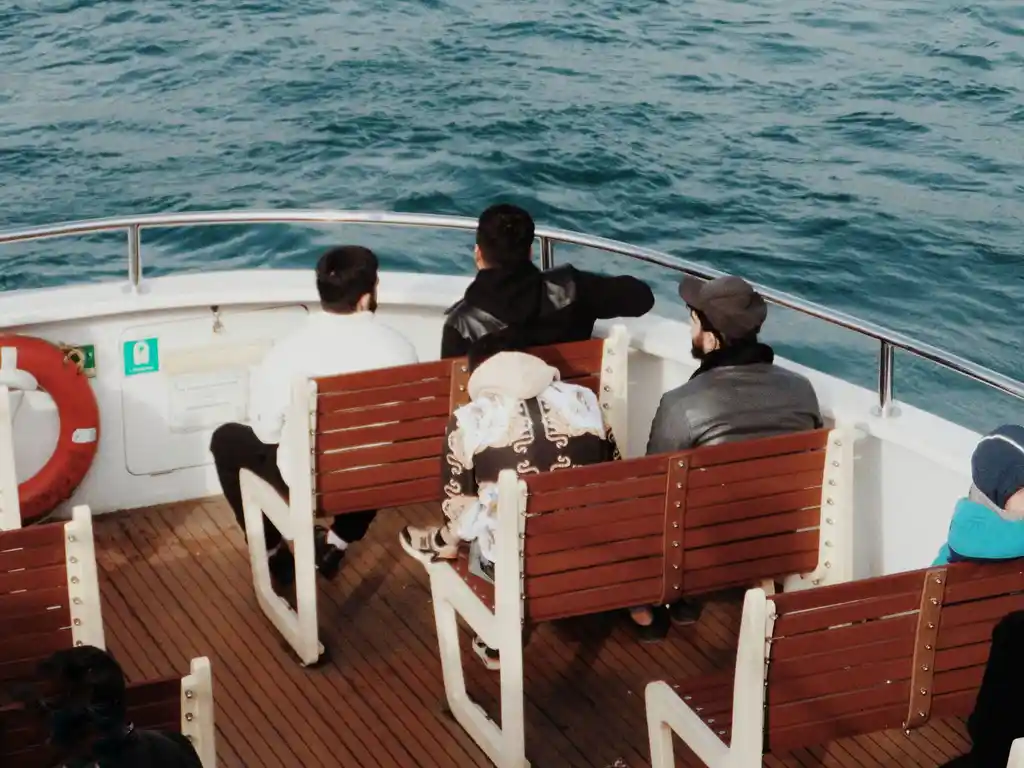
A deck boat is a wide, open motorboat built for space and comfort, with a roomy cockpit that feels larger than a traditional boat of the same length. It suits families and groups who want seating for everyone, room to move around, and a boat that is easy to use for cruising, swimming, and picnics. If space is your priority, a deck boat is one of the best types to consider.
Deck boats sit between bowriders and pontoons. They have the wide beam and open layout of a pontoon, with the handling and performance of a V-hulled boat. That combination makes them versatile, and it explains why they are popular on lakes and in sheltered coastal water. This guide explains how deck boats work, who they suit, and what to check before you buy.
What Is a Deck Boat
A deck boat has a wide hull that carries its beam further forward than a traditional bowrider, giving a large, open deck area at the front as well as the cockpit. The result is a boat with more usable floor space, more seating, and a layout that feels open from bow to stern. Most deck boats use a single outboard or sterndrive, and many have a swim platform, a boarding ladder, and a bimini top.
The hull is usually a modified V shape, which gives a smoother ride than a flat-bottomed boat and better handling than a pontoon in a light chop. Deck boats are built for day use, not overnight stays, and they are at their best on lakes, rivers, and sheltered bays. For a broader comparison, our boat types explained guide shows how deck boats compare with bowriders, pontoons, and centre consoles.
Space and Layout on a Deck Boat
Space is the main reason to choose a deck boat. The wide bow gives seating for several people at the front, while the cockpit has a helm, a passenger seat, and a rear lounge or bench. Some models add a table in the middle, a sun pad at the stern, and a small changing area or head compartment. The open layout means you can walk from bow to stern without climbing over seats, which is useful with children or older passengers.
Storage is generous on most deck boats, with space under the bow seats, under the cockpit seats, and in a ski locker in the floor. That storage keeps life jackets, towels, and gear out of the way, and it helps the deck stay clear and safe. When you look at a deck boat, sit in every seat, walk the full length of the deck, and check whether the layout feels open or crowded with your usual group in mind.
Comfort for Families and Groups
Deck boats are comfortable for families because they give everyone a seat and a place to move. Children can sit in the bow with a clear view, adults can sit in the cockpit near the helm, and the whole group can gather around a table at anchor. Shade from a bimini top covers much of the seating area, and a swim platform with a ladder makes swimming easy.
For longer days, look for a head compartment or a portable toilet, a cooler or fridge, and a freshwater shower at the stern. These features are not on every deck boat, but they make a full day afloat much more comfortable. If you boat with children, our best boats for families guide covers the safety features to look for, from life jackets to secure seating and grab rails.
Handling and Performance
A deck boat handles like a larger bowrider: stable, predictable, and easy to steer at cruising speed. The wide beam gives good stability at rest, which helps when people are moving around or boarding from a dock. In a light chop the modified V hull rides more smoothly than a pontoon, though a deck boat is not built for rough open water and should stay in sheltered conditions.
Engine choice matters. A deck boat is heavier than a narrow boat of the same length, so it needs enough power to plane easily with a full load. Check how the boat accelerates, how it holds speed, and whether it can tow a tube or a skier if that matters to you. A sea trial with a normal load on board is the best way to judge performance, and it will show whether the engine is well matched to the hull.
Deck Boats Compared With Pontoons and Bowriders
Compared with a pontoon, a deck boat handles better at speed and in a chop, and it usually has a more traditional helm and a cleaner look. Compared with a bowrider, a deck boat offers more space and a wider bow, but it is heavier and may use more fuel. Compared with both, a deck boat is a good middle ground: more space than a bowrider, better handling than a pontoon.
The right choice depends on your water and your crew. If you boat on a small, calm lake and want maximum space at rest, a pontoon may suit you better. If you want speed and a sporty feel, a bowrider may be the better pick. If you want room for a group, comfort for a full day, and handling that works in a light chop, a deck boat is worth a close look. Our bowriders guide explains the other side of that comparison in detail.
What to Check Before You Buy a Deck Boat
Inspect the hull and deck for damage, soft spots, and water stains, and check the upholstery for tears and wear. Upholstery covers a large area on a deck boat, so replacement can be costly if it is in poor condition. Check the engine from cold, test the steering and the electronics, and make sure the bilge pump, lights, and horn all work.
- Check the deck for soft spots, especially around fittings and seat bases.
- Test the engine from cold and check performance with a full load.
- Inspect upholstery, canvas, and the bimini top for wear and damage.
- Confirm seating capacity and weight limits suit your usual group.
Think about towing and storage too. A deck boat is wider than a standard boat, so check the trailer, the towing weight, and whether it fits your storage space. A wider boat may also need a wider launch ramp or more care when docking. Take your time, compare two or three models, and choose the deck boat that fits your crew, your water, and your budget, not just the one with the most seats.
Think about fuel and range when you choose a deck boat. A wide hull with a full load uses more fuel than a narrow boat, so check the tank size and plan your trips with a reserve in mind. Fill up before a long day rather than relying on a fuel dock that may be closed or busy, and keep an eye on the gauge during the trip. Carry a small amount of spare fuel only if it is stored safely in an approved container, and never store fuel in the cabin or near the engine. Simple fuel planning keeps a day trip relaxed, and it avoids the stress of running low far from shore.
What is a deck boat?
A deck boat is a wide motorboat with an open layout and extra space from bow to stern. Its beam extends further forward than a traditional bowrider, giving more seating and floor space. Deck boats suit families and groups on lakes and in sheltered water, and they handle better at speed than a pontoon.
Are deck boats good for beginners?
Deck boats are good for beginners because they are stable, predictable, and easy to handle at cruising speed. The open layout is simple to use, and the wide beam gives confidence at rest and when boarding. Start with a modest size, practise docking in calm conditions, and build experience gradually.
How many people can a deck boat carry?
Capacity depends on the size of the boat, with many deck boats rated for eight to twelve people. Check the capacity plate for the maximum number of people and the maximum weight, and remember that a boat rated for twelve can still feel crowded with twelve adults. Choose a size that gives your usual group a comfortable seat.
Are deck boats good in rough water?
Deck boats handle a light chop better than a pontoon, but they are not built for rough open water. Their wide hull and open bow can take spray in larger waves. Use a deck boat on lakes, rivers, and sheltered bays, and head for shore early if the wind builds or conditions change.